
Story views: 3
According to the news site “Madan Nameh“, the base rate of gas consumed by direct reduction steel units in 1405 (Iranian calendar year corresponding to 2026-2027) has followed an upward trend, rising from 10,773 tomans in Farvardin (March-April) to 18,927 tomans in Mehr (September-October). This increase amounts to 75.7% over seven months. At the same time, the base rate of gas consumed by the steel industry in Mehr this year has increased by 239% compared to Mehr of the previous year, rising from 5,586 tomans to 18,927 tomans per cubic meter. Considering costs such as value-added tax, transfer, and distribution, the final price of gas consumed by steel producers in Mehr reaches approximately 25,551 tomans.
This increase has occurred while a significant part of Iran’s steel industry advantage in recent years has been based on access to natural gas and the development of gas-based direct reduction technologies. Now, the rising energy costs, alongside the potential supply limitations during the cold months, raise a more serious question of whether the current energy pricing model aligns with the competitive capacity of Iranian steel producers and mining industries.
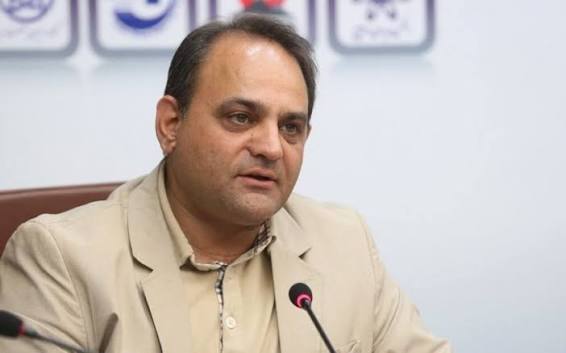
In this regard, Arman Khaleghi, Secretary-General of the Iran Industry, Mining and Trade House, in an interview with “Madan Nameh“, referred to the experience of increased electricity tariffs, stating: We have previously had negative experience regarding electricity tariff determination and saw the consequences for industries. The legal arrangements that should have been observed were not implemented. Regarding gas, it seems that the Ministry of Petroleum has learned from the Ministry of Energy to carry out the work in whatever manner they desire.
The Secretary-General of the Industry, Mining and Trade House added: In the gas sector, since the price increase is implemented by the government, the ultimate outcome is an increase in the production cost for products. Therefore, the start of inflation and price hikes originates from here.
He mentioned the increase in costs of other energy carriers, saying: This has also happened regarding electricity and diesel. Diesel is intended to be used as a substitute for gas in many production and mining units, but unfortunately, it is sold at very high prices per liter in the free market. Furthermore, increased diesel prices also raise transportation costs, which ultimately leads to higher production and sales costs.
The Secretary-General continued: Ultimately, producers must supply energy in any form, whether gas, electricity, or liquid fuel, and naturally face many problems. Subsequently, producers are also objected to for increasing prices, and enforcement actions are taken against them.
He emphasized that increasing the prices of industrial products does not necessarily mean higher income or capital for the producer, stating: More expensive industrial outputs do not translate into increased investor capital; rather, they reduce competitiveness, especially in the domestic market where consumers’ purchasing power has not increased.
Rising Energy Costs Put Pressure on the Mining and Steel Chain
Khaleghi referred to the effects of increased fuel costs on mining and mineral industries: In the mining, mineral industries, and steel sector, when fuel prices rise, its negative impact is ultimately evident along the value chain, naturally reducing the competitiveness of the mineral, mineral products, and steel products, leading to decreased sales.
He criticized the sectoral approach in energy policymaking, saying: What result comes from pressuring producers only to solve issues of state sectors? To resolve the problems of the Ministry of Petroleum and Gas Company, pressure is applied to producers and ultimately consumers. Similarly, to address the Ministry of Energy and Tavanir’s problems, electricity prices rise to solve their issues.
According to Khaleghi, such decisions are made without considering producers’ conditions and indicate there is no comprehensive plan for the entire chain.
He stressed: The focus is only on solving part of the system’s issues, with no consideration for the chain’s endpoint.
Possibility of High-Consumption Industries Exiting Production Cycle in Winter
Responding to a question about the simultaneous rise of gas prices with the approach of peak gas consumption season in winter, Khaleghi said: Due to the war condition and other problems, the country faces gas production challenges and weaknesses, and pressure might be applied to consumers across sectors – household, service, and industrial.
He added: Industrially, some high-consumption industrial units appear to be more vulnerable and, considering the start of the cold season and increased gas demand nationwide, their gas supply will be cut off due to lack of capacity.
Khaleghi predicted that some high-consumption industrial units will temporarily exit the production cycle during peak gas usage and added: It is completely foreseeable that during the gas peak consumption period, these units will likely be out of the production loop.
Energy Advantage Is Not Meaningful Without Export Competitiveness
The Secretary-General of the Industry, Mining and Trade House pointed out Iran’s considerable natural gas resources and explained why industries face such circumstances: We always consider energy advantage, labor advantage, and resource advantage as production benefits in Iran. Regarding energy advantage such as gas and electricity, it’s always said consumers do not use it correctly due to its low prices. Therefore, based on international prices, energy prices are determined to increase. However, our industries do not have competitive conditions with the world.
He added: This is true in normal conditions that subsidies on energy benefit certain groups undeservedly, but today we are in a situation where we must see if producers can stay operational with these conditions or will perish. Now, the discussion is about the existence or nonexistence of production.
According to Khaleghi, intensifying cost pressures on producers can ultimately lead to production capacity loss.
He emphasized: The tighter the conditions for producers become, we will see the consequences in the loss of production capacity in different production units. We must determine whether it is in the country’s interest to proceed with these conditions and decisions or to preserve production.
Khaleghi stated that executing the right action at the wrong time eventually means a wrong action with bad results, and emphasized that today production must be protected by any means.
He also commented on how the government decides to increase energy costs: Today, has the government communicated with the private sector regarding such decisions, or has it been unilateral? Has the private sector been given a chance to prepare for such conditions? Have compensatory measures been considered for the consequences?
Energy Price Reforms Must Coordinate with Production Conditions
Khaleghi referred to the history of energy price policymaking in the country, saying: An error occurred in the 7th Parliament regarding the energy price freeze plan, whose effects we still endure today, resulting in various damages to the country over these years.
He explained: The plan was to gradually balance energy prices with global prices over several years to free ourselves from harmful energy subsidies and reach equilibrium. However, the 7th Parliament blocked this under the title of price stabilization, and subsequent parliaments could not compensate, and later governments somewhat abandoned the issue.
According to the Secretary-General, the result of this process is that the energy price issue remains unresolved.
Khaleghi added: Energy prices remain like a bone stuck in the wound, and we continue to witness their effects.
He further emphasized: Comparing domestic energy prices to global prices without considering Iranian business conditions cannot serve as an appropriate policymaking basis.
He added: If it is said that fuel must be provided at FOB Persian Gulf prices to domestic industrialists like power plants, steelmakers, or petrochemical plants, the other side of this must also be considered; that our export conditions are normal, national borders are not encircled, and exports to other countries are not subject to additional costs.
Khaleghi noted: Today, with increased transportation costs, escalating border problems, stricter restrictions, and intensified sanctions, we cannot say producers are in normal conditions and that the advantage of cheap energy should be removed.
The Secretary-General concluded: There is no dispute that the right policy is not to have any advantage in this matter, but on the other hand, such measures cannot be handled piecemeal without considering other sectors.