According to Pthe Mining News Agency, the rise in costs of gas consumed by industries continues while steel producers face multiple challenges. Limitations in electricity and gas supply, difficulties in financing, and export barriers have placed additional pressure on the operations of these units. The continuation of this situation raises concerns about the competitive advantage of Iran's steel industry in the future.
A significant portion of the country's sponge iron production capacity has been developed over the past years relying on access to natural gas resources. Therefore, stable gas supply and predictability of its cost are crucial for the continuity of this industry's activities.
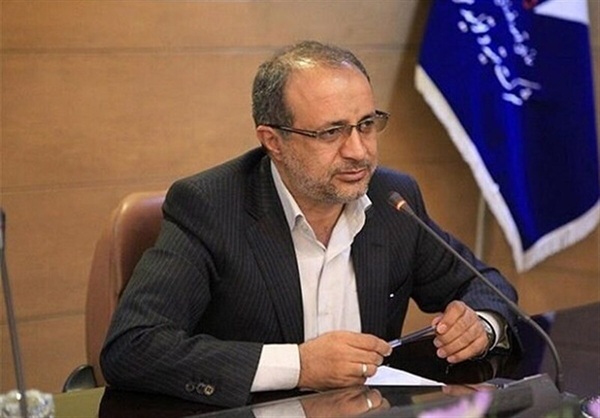
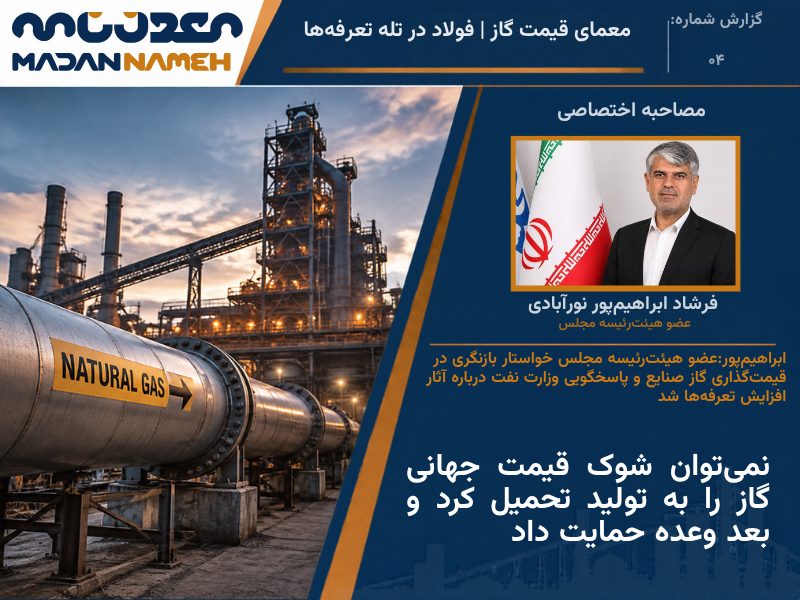
Farshad Ebrahimpour Nourabadi, a member of the Board of Directors of the Islamic Consultative Assembly, in an interview with the Mining News Agency, pointed out the impact of wartime conditions and fluctuations in global energy markets on production costs, believes that domestic industries should not be exposed to abnormal price shocks without having supportive mechanisms in place.
He stated that part of the gas pricing formula is influenced by international indicators. Therefore, one cannot ignore the effects of global market instability on domestic production and expect factories to bear the full pressure of rising energy costs.
The necessity to review the gas pricing formula.
Ibrahimpoor considered a temporary review of the way some pricing indicators are applied as one of the viable solutions. He emphasized, however, that such an action should not turn into an arbitrary decision.
According to this member of parliament, any change in the pricing mechanism must have a specific duration of implementation and measurable criteria. Additionally, the conditions for the start and end of implementation must be clear. Such an approach can, while reducing pressure on producers, also preserve the resources needed for energy supply and the development of gas industry infrastructure.
The importance of this issue for the steel industry is not limited to the increase in the gas bill. In direct reduction units, natural gas plays a role not only in energy supply but also in the production process of sponge iron. Therefore, an increase in its cost can directly affect the final product price.
On the other hand, restrictions on gas delivery may reduce the production capacity of factories. In such a situation, fixed costs are spread over a smaller volume of product, placing greater financial pressure on the production unit. As a result, the producer may face an increase in energy costs along with a decrease in production capacity.
Bank facilities are not a substitute for energy policy reforms.
In another part of his statements, the member of the parliamentary board addressed the issue of supporting damaged industries in the budget for the year 1406. He believes that support packages and working capital facilities can help some industrial units overcome financial problems. However, these supports should not replace the reform of structural issues.
Ibrahimpoor believes that if part of the financial pressure on the producer is due to the pricing method of energy or instability in its supply, merely providing facilities will not solve the problem.
Bank facilities may temporarily cover the factory's liquidity shortage, but if the imposed costs continue, new financial obligations will also be added to the production unit.
This issue is more significant for industries affected by war and energy limitations. These units require financial resources not only to cover current costs but also to maintain employment, fulfill commitments, and return to production capacity.
Supporting these industries is an economic necessity. Nevertheless, according to Ebrahimpour, support policies will have a more sustainable effect when factors that create and repeat financial pressure are also considered alongside compensation for damages.
Energy tariffs and the future competitiveness of Iran's steel
Ebrahimpour also referred to the statements of Seyed Mohammad Atabak, the Minister of Industry, Mines and Trade, regarding the danger of weakening production advantages due to the pricing method of electricity and gas, and called for a more serious examination of the effects of energy tariffs on the competitiveness of industries.
He believes that Iran's steel industry needs a competitive cost price, in addition to reliable access to raw materials and energy, to maintain its position in export markets.
According to this parliament member, the increase in energy costs alongside problems in financial sourcing, transportation, and export limitations makes it more challenging for Iranian producers to operate in target markets.
In such conditions, evaluating the gas pricing policy should not focus solely on the revenue generated from energy sales. The effects of this policy on production, employment, exports, and foreign exchange earnings must also be considered in the economic calculations of decision-makers.
Maintaining the competitive advantage of industries does not mean overlooking the costs of gas supply. The gas industry requires financial resources to maintain the network, develop production capacity, and address supply limitations.
Ebrahimpour emphasized that the provision of these resources should be done within a framework of policy that does not deprive consumer industries of their production and competitive capabilities.
The parliament called for transparency in the calculation of tariffs.
A member of the parliament's presiding board further deemed oversight of the basis for calculating energy tariffs as essential. He called for the Ministry of Oil, the Ministry of Industry, Mine, and Trade, and the National Gas Company to provide clear information about the real costs of gas supply and transmission, the method of determining industrial tariffs, and the revenue derived from gas sales.
The investment program for infrastructure development is also another issue that he believes should be examined.
In Ebrahimpour's view, the increase in the cost of gas for producers should be assessed alongside its economic outcomes. If industries are paying more for energy, it should be clarified what role the revenue from this increase plays in improving gas supply, developing infrastructure, and reducing energy imbalance.
He also emphasized that parliamentary oversight will be effective only when executive bodies are accountable for the impacts of their decisions on production. Providing information and calculations, along with an operational plan and a specific timeline to address issues, are prerequisites for such oversight.
Gas sales revenue or the benefits for the national economy?
The issue that Ebrahimpour raises pertains to one of the fundamental questions of the country's energy policy: Can the increase in revenue from gas sales to industries, without examining its effects on production, investment, employment, and exports, serve as a measure of the success of pricing policy?
Answering this question requires simultaneous examination of the financial needs of the gas industry and the effects of tariffs on manufacturing enterprises.
If the reduction in the competitive capacity of industries leads to a drop in production and exports, part of the economic benefits gained from increased energy sales revenue may also be affected. In contrast, neglecting the actual costs of gas supply and the investment needs of this sector could jeopardize the sustainability of energy supply.
The main issue is achieving a mechanism that balances the provision of the required resources for the gas industry and maintaining the production capacity of manufacturers. The importance of this balance increases in wartime and during unusual fluctuations in global energy markets.
Ebrahimpour emphasized the necessity of reforming pricing policies, making energy costs predictable, drafting a reliable plan for gas supply to industries, and holding responsible agencies accountable. He viewed financial support as part of this set of actions, not a replacement for it.
The future of industrial investments depends on energy policy
Maintaining the energy advantage for Iran's steel industry goes beyond a sector-specific demand. This issue is directly related to the future of investments made, the continuity of employment, and the country's export competitiveness.
It is now expected that the responsible ministries will, while providing clear calculations on gas tariffs, specify their plan to prevent the transfer of unusual pressures from the global market to producers and to maintain energy supply sustainability.
The question that the government and parliament must answer is how to secure the necessary resources for the development of the gas industry without gradually undermining the competitive ability of producers who have invested in the advantage of accessing this gas.