
Story views: 1
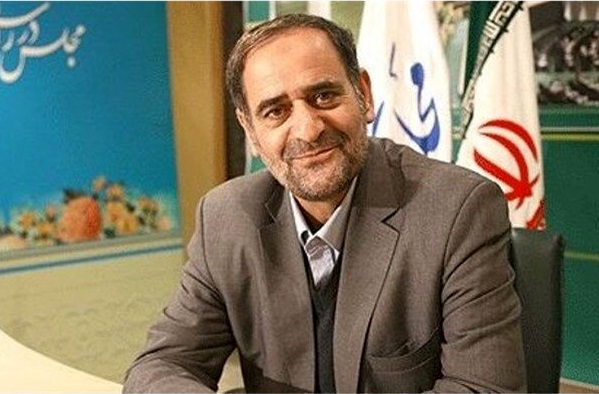
Rouhollah Abbaspoor, in an interview with the news platform «Madan Nameh», stated that currently the country’s industries face gas imbalance issues for about 5 months during the cold season and power imbalance for another 4 months during the warm season. He added: Unfortunately, this issue has had significant effects on our country’s industry, especially heavy industries such as steel and cement.
He continued: According to the Seventh Development Plan, the industry should grow by 8%, but when we invited the Ministry of Industry, Mine and Trade in the parliamentary Industries and Mines Commission to oversee the proper implementation of the Seventh Plan, representatives from this ministry presented a report indicating 2.3% industrial growth. However, I personally did not agree even with this figure and believe that even the 2.3% growth has not occurred, and for this reason, the commission did not accept this report. We observe the situation closely and see that even this 2.3% growth has not happened.
The representative of Buin Zahra and Avaj in the parliament added: In many cases, due to energy imbalance, most production lines in steel factories are stopped and only one of eight production lines is operational. When our industrial towns face power cuts for 2 to 4 days a week, even leading to complete power outages during the week, and when a steel factory operates at one-eighth of its capacity, the accepted growth of 2.3% is definitely not acceptable.
A member of the parliamentary Industries and Mines Commission identified one of the most significant consequences of energy imbalance as its negative impact on employment and added: When we say that only one out of eight production lines in a steel factory is active, then that complex is forced to reduce its workforce proportionally.
Abbaspoor described the reduction in exports as another consequence of energy imbalance in our industries and said: If exports decline, naturally we will face problems in foreign exchange earnings, the currency supply in the country will decrease, and as a result, the currency price will rise and the national currency will ultimately lose value. On the other hand, national tax revenues also decrease. Therefore, we see that energy imbalance does not create just one problem, but multiple sectors such as employment, tax revenue, and foreign exchange will face challenges and difficulties.
The representative of Buin Zahra and Avaj pointed out the loss of competitive advantages for domestic steelmakers against steel producers in neighboring countries as another result of energy imbalance in industries, and noted: Due to these problems related to energy imbalance, Iran’s steel industry faces difficulties competing with Turkey, the UAE, China, and other steel-producing countries and loses its markets. This issue was recently raised in a meeting attended by the Minister of Industry, Mine and Trade, the chairman and members of the parliamentary Industries and Mines Commission, and members of the Steel Producers Association, with steel producers expressing their concerns on this matter.
Abbaspoor concluded by referring to the Ministry of Energy’s role in creating the current situation and said: This ministry had not made the necessary forecasts in advance to prevent this problem, and the Gas Company also had not properly fulfilled its duties in the past. These factors have unfortunately led to energy imbalances in summer and winter, causing irreparable damage to our production sector. Therefore, the government is obliged, due to mismanagement in this area, to compensate the losses of steel producers and other industries.